International comparison
Building homes to support economic growth

Housing supply followed planning reform
Austin
Rapid growth in its tech economy pushed Austin's housing costs up sharply and the city responded by making it much easier to build.
Vertical Mixed Use zoning allowed housing within commercial areas and cut setback and parking requirements. Accessory dwelling units drove small-scale infill across residential neighbourhoods. In 2023 the city removed minimum parking requirements citywide, lowering construction costs and freeing up land.
Between 2015 and 2024 Austin added around 120,000 homes, increasing its housing stock by roughly 30%. Over the same period Cambridge added around 6,900 net new homes and Oxford around 2,600. Austin paired this with fast grid connections, keeping the cost of building and operating low.
Commutable catchment maps
How many people each cluster can reach in an hour, and how much of that catchment depends on the car rather than public transport. Change the place or the threshold to compare.
60-minute catchment overlap
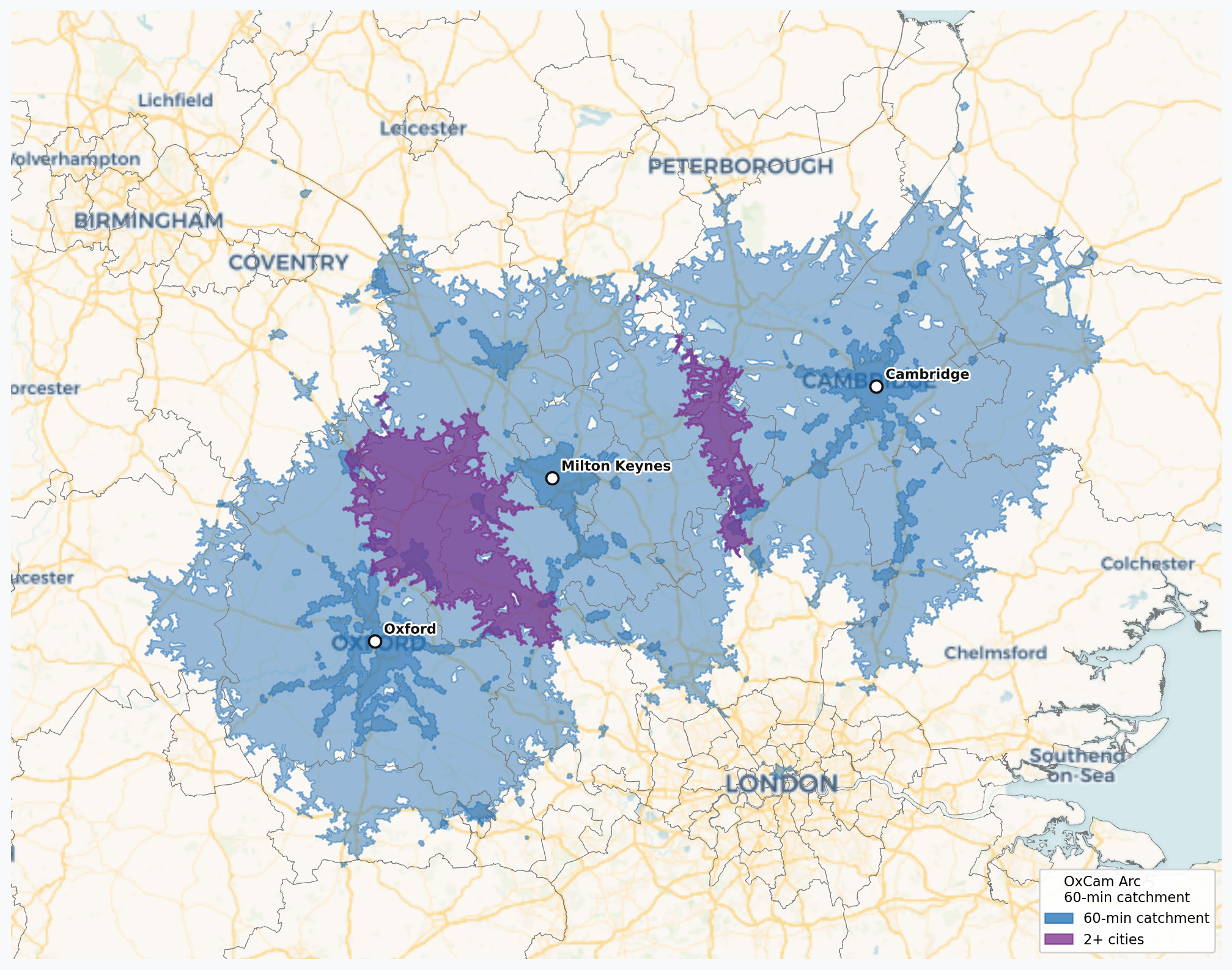
OxCam's 60-minute overlap is small and splits into two disconnected pockets.
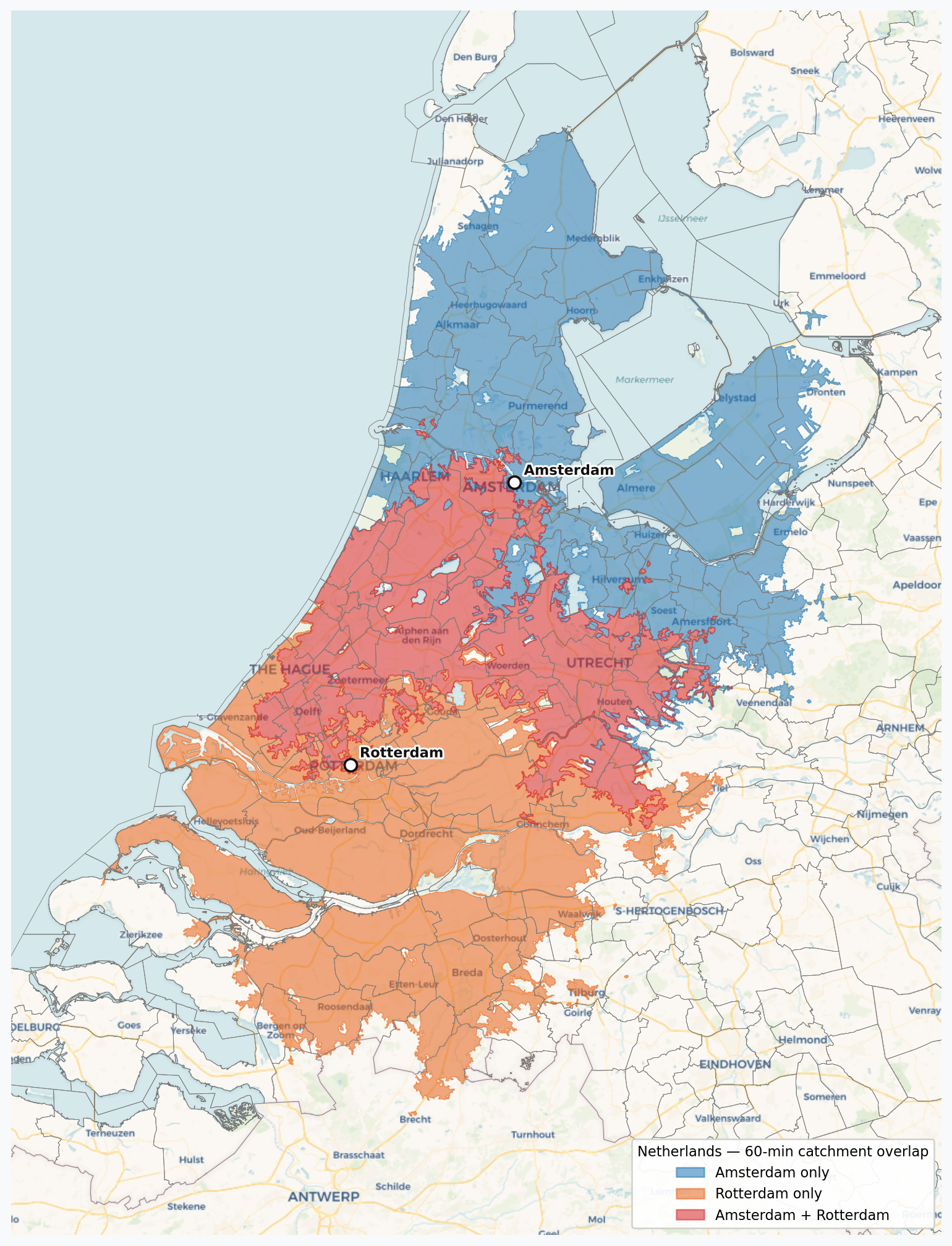
The Randstad's overlap covers almost the entire route between Amsterdam and Rotterdam, including Utrecht and The Hague.
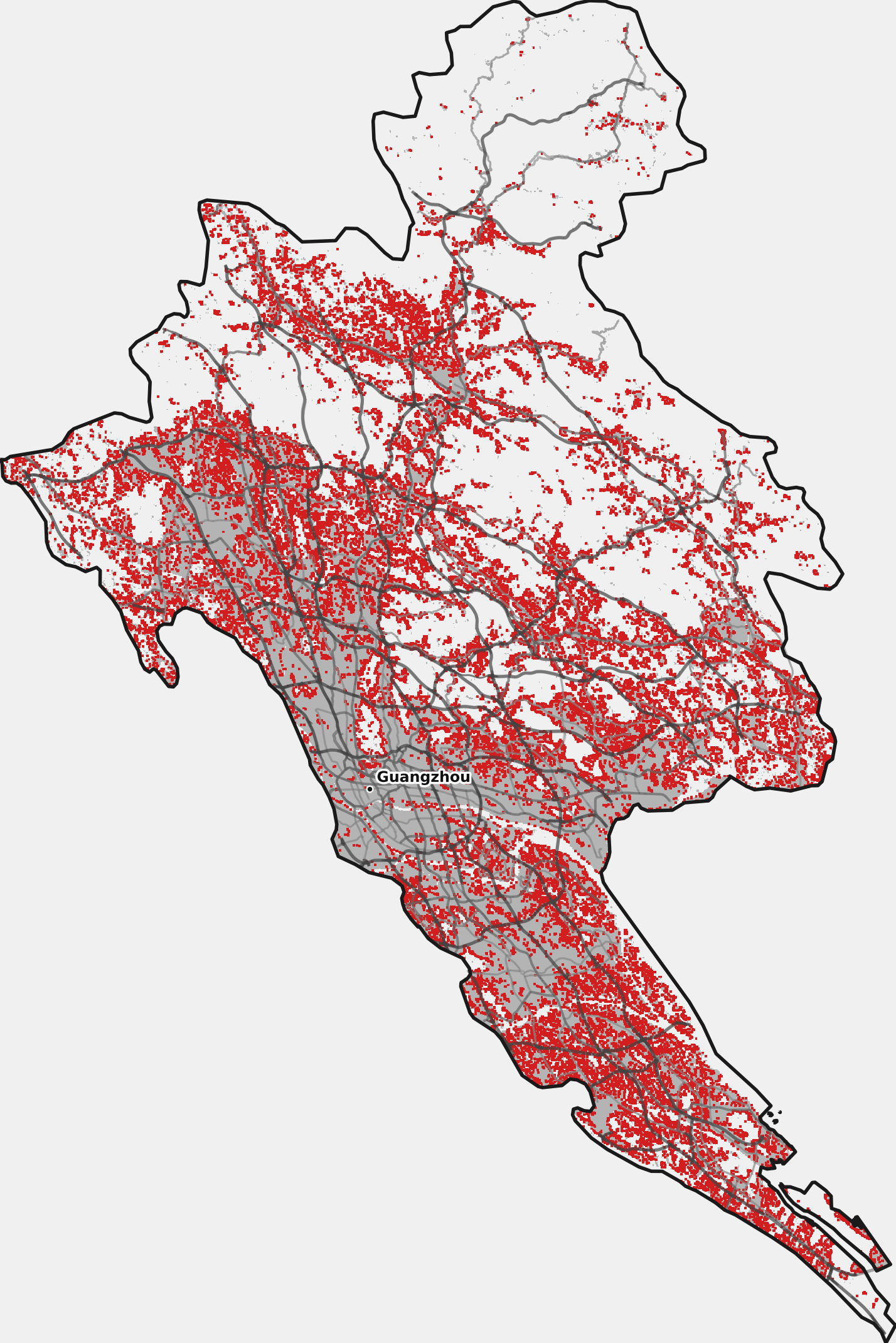
Development pattern
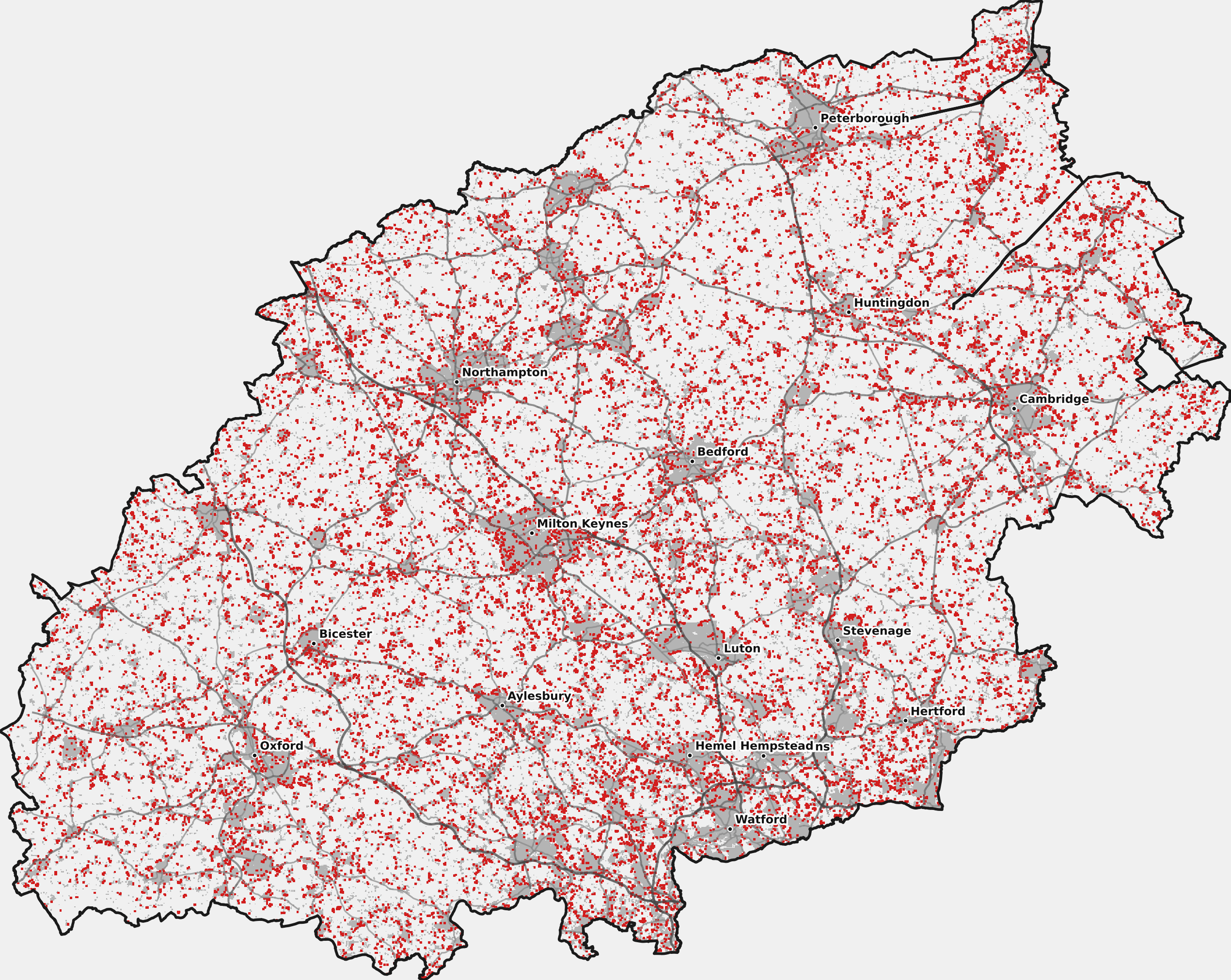
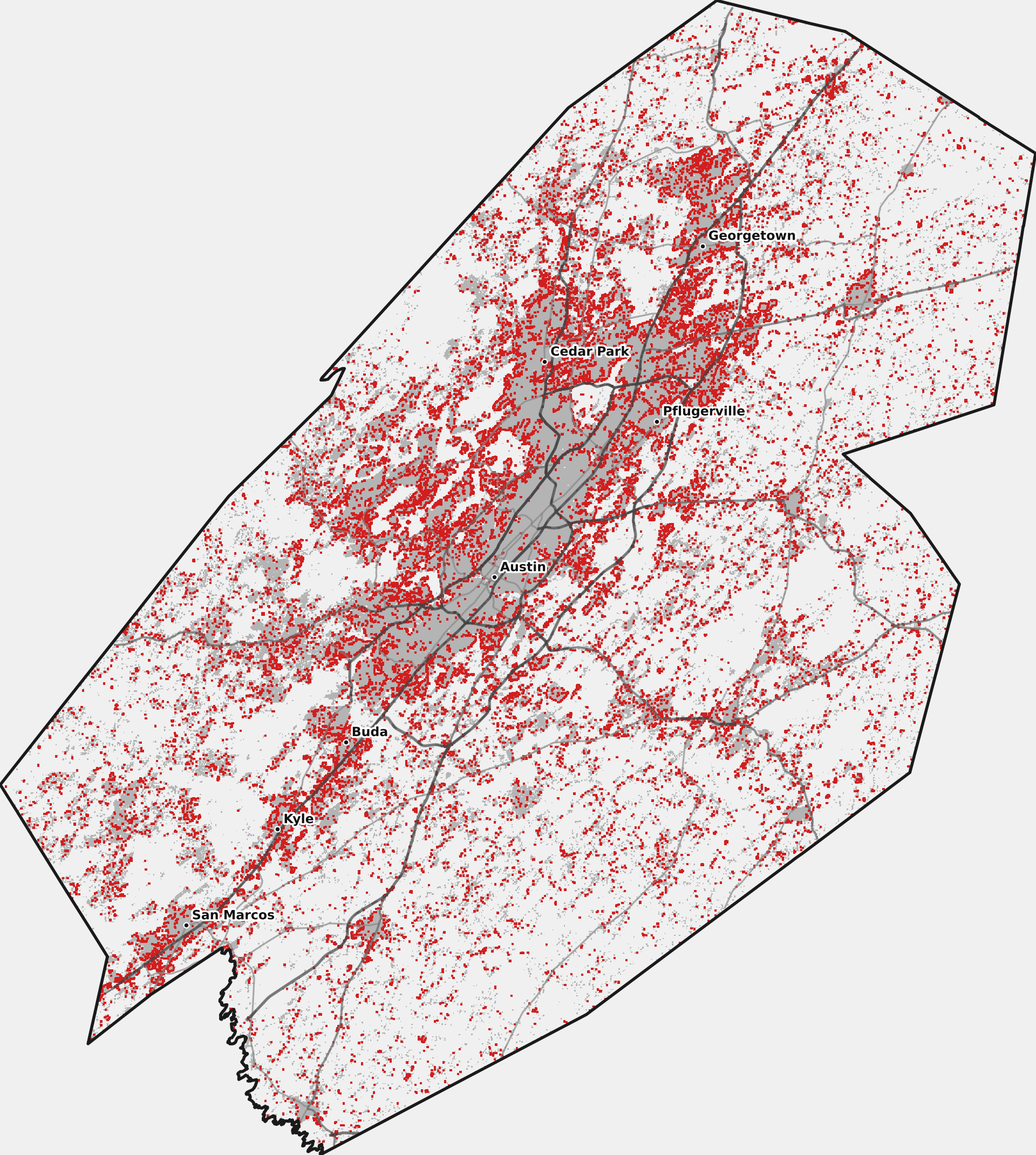
OxCam's new development is dispersed across almost the whole region. Austin's and Guangzhou's extends and densifies what was already built, following the road network.
International comparison
Making a polycentric cluster one labour market

Four cities, one labour market
The Randstad
The Randstad links Amsterdam, Rotterdam, Utrecht and The Hague through high-capacity intercity rail, one of the densest motorway networks in Europe and extensive cycling infrastructure, all planned alongside housing and commercial development.
This transport network gives Dutch cities greater reach compared to OxCam despite a dispersed geography such that extending a journey from 50 minutes to 60 brings more than a million extra residents within range of both Amsterdam and Rotterdam. The same ten minutes adds just 406,000 people in Oxford, Cambridge and Milton Keynes.